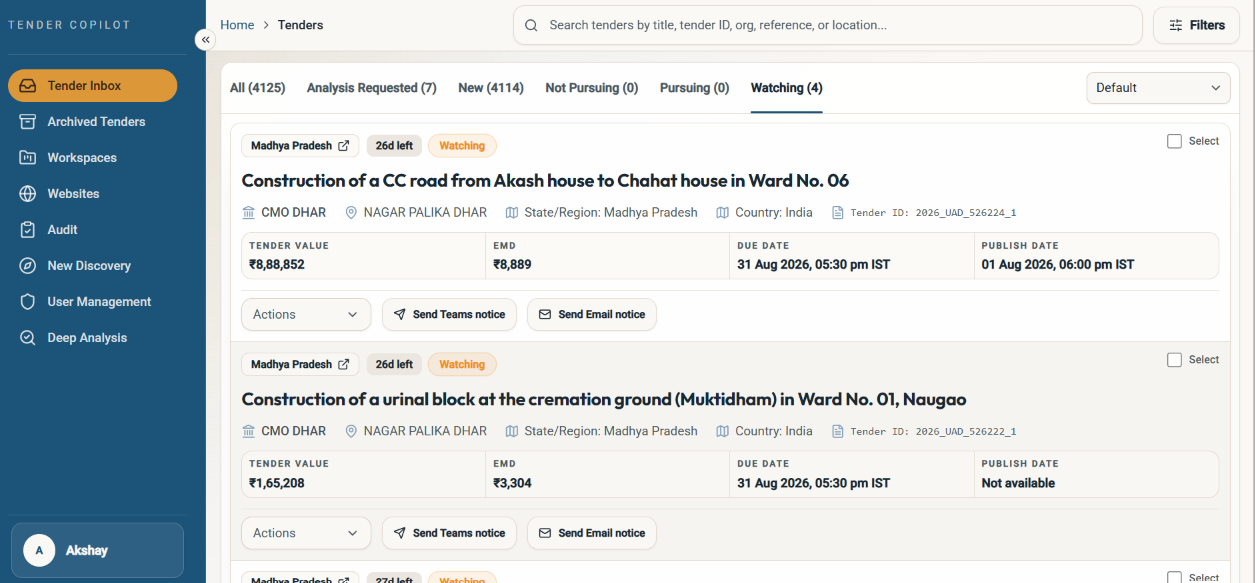
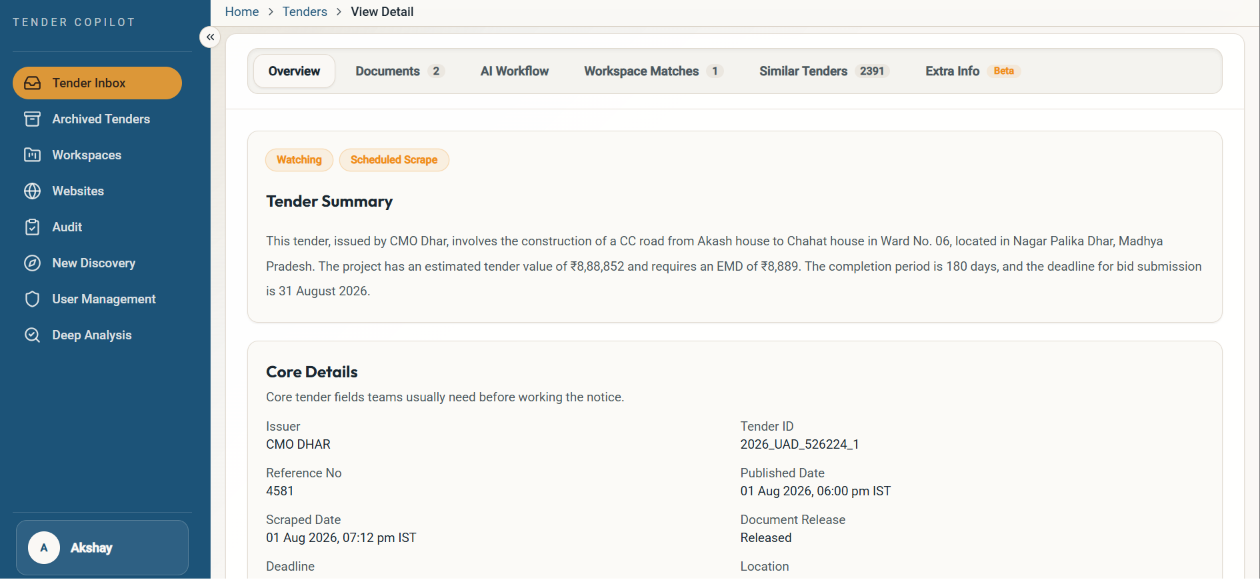
Manipal's business-development team competes for government and enterprise contracts worth crores. The opportunities are real, but finding and reading them took most of the team's time.
Tenders and RFPs are published across 280+ separate portals, central and state government, PSUs, private buyers, each with its own format, login, and posting rhythm. The only way to keep up was manual: scan, download, read dense RFPs, and decide whether to bid.
Reading was the slow part. An average tender runs to about 30 pages and took a reviewer a full day. A large one, 200 pages or more, took about six days. Eligibility, EMD, deadlines, penalty clauses, and compliance terms were pulled out by hand, different reviewers picked up different things, and questions from legal and finance went back and forth over email.
1 day
to review an average 30-page tender by hand
~6 days
to review a 200-page tender by hand