The State of AI in Mining 2026
Where AI is delivering value for mine operators, why most pilots stall, and a 90-day playbook for capturing it.

- 2–5%
- higher site throughput from proven AI applications
- 2–4 pts
- of margin improvement
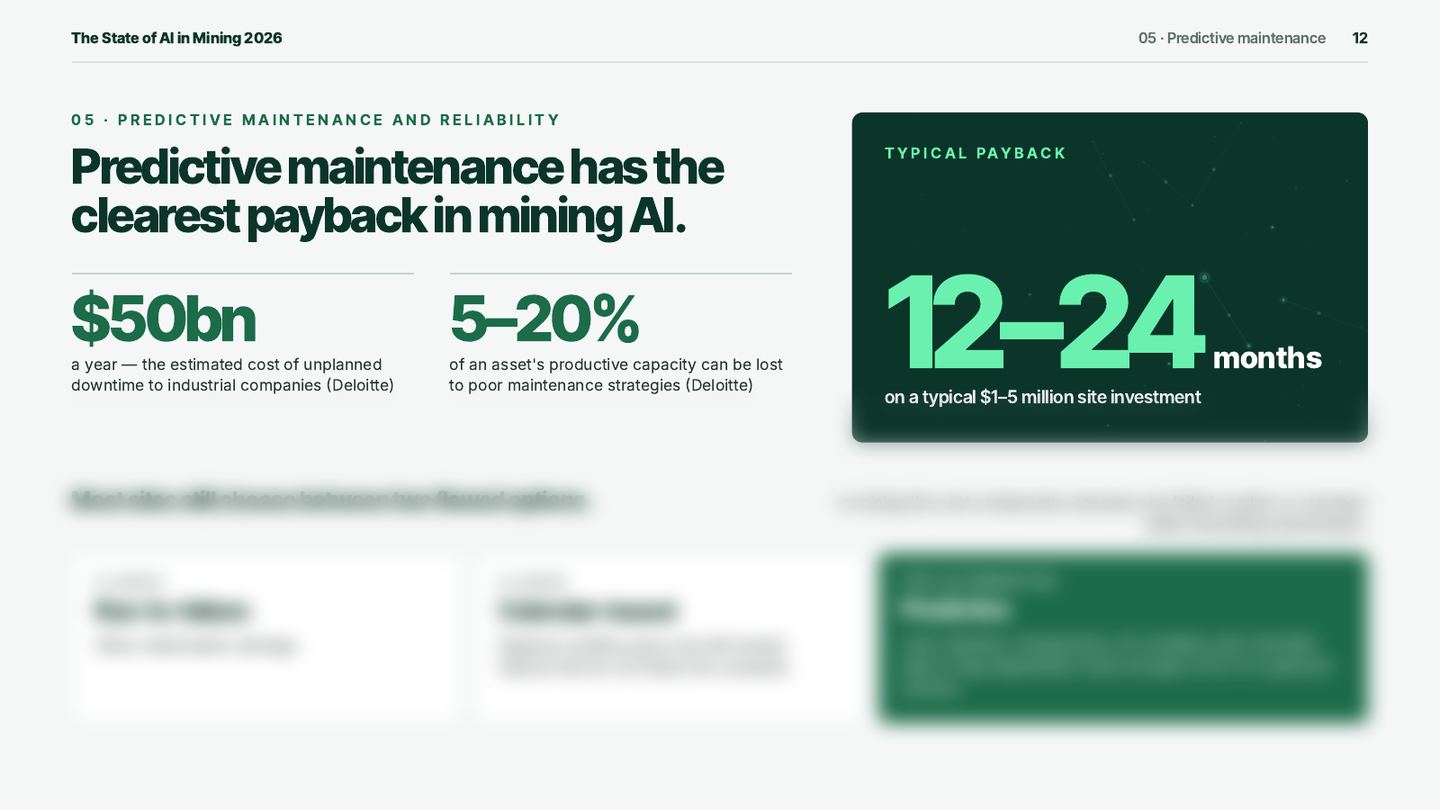
- 12–24 mo
- typical payback on predictive maintenance
- ₹1,900 cr
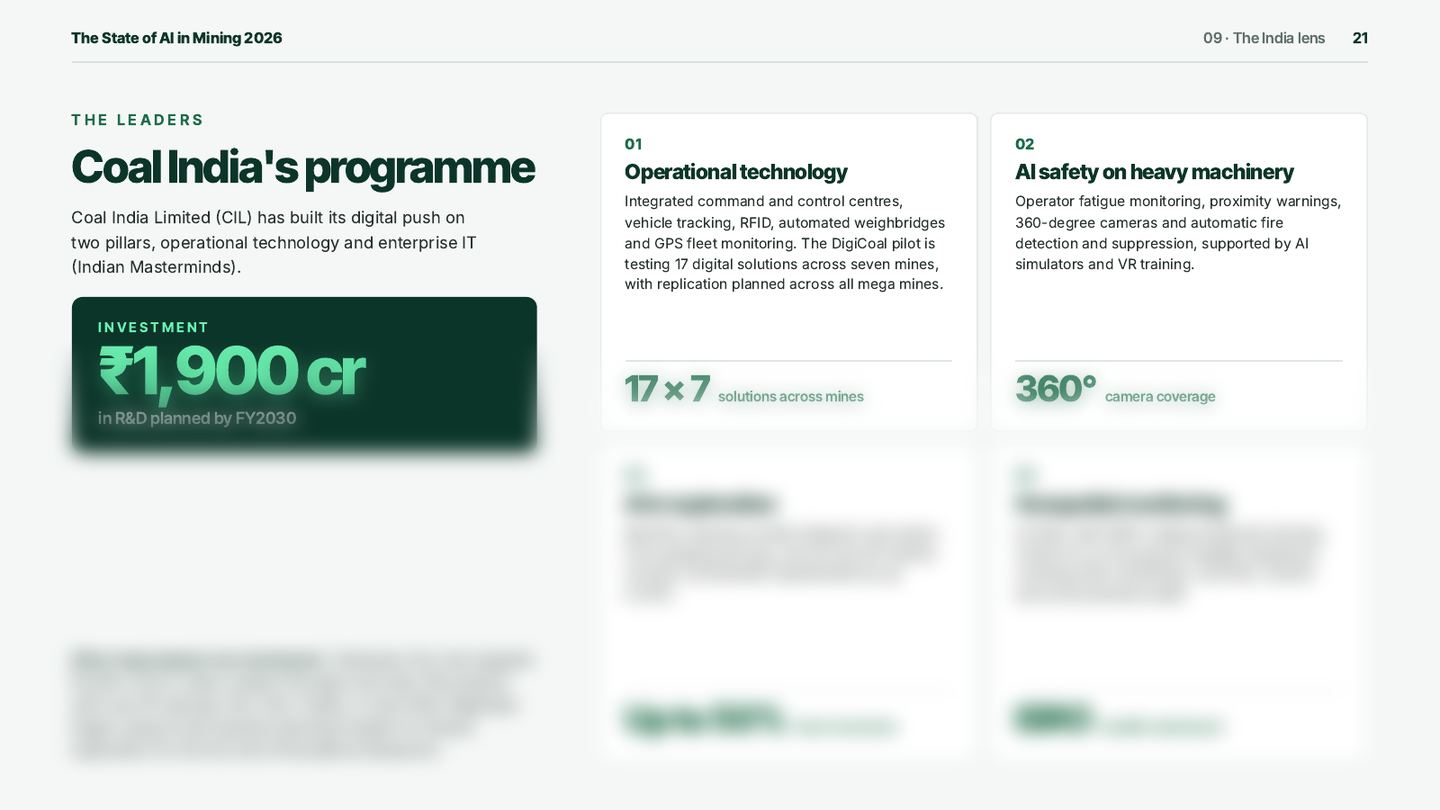
- in R&D Coal India plans by FY2030
Five findings, 33 pages of evidence. Drawn from BCG, McKinsey, Deloitte and BHP research, and our own work with Indian mine operators.
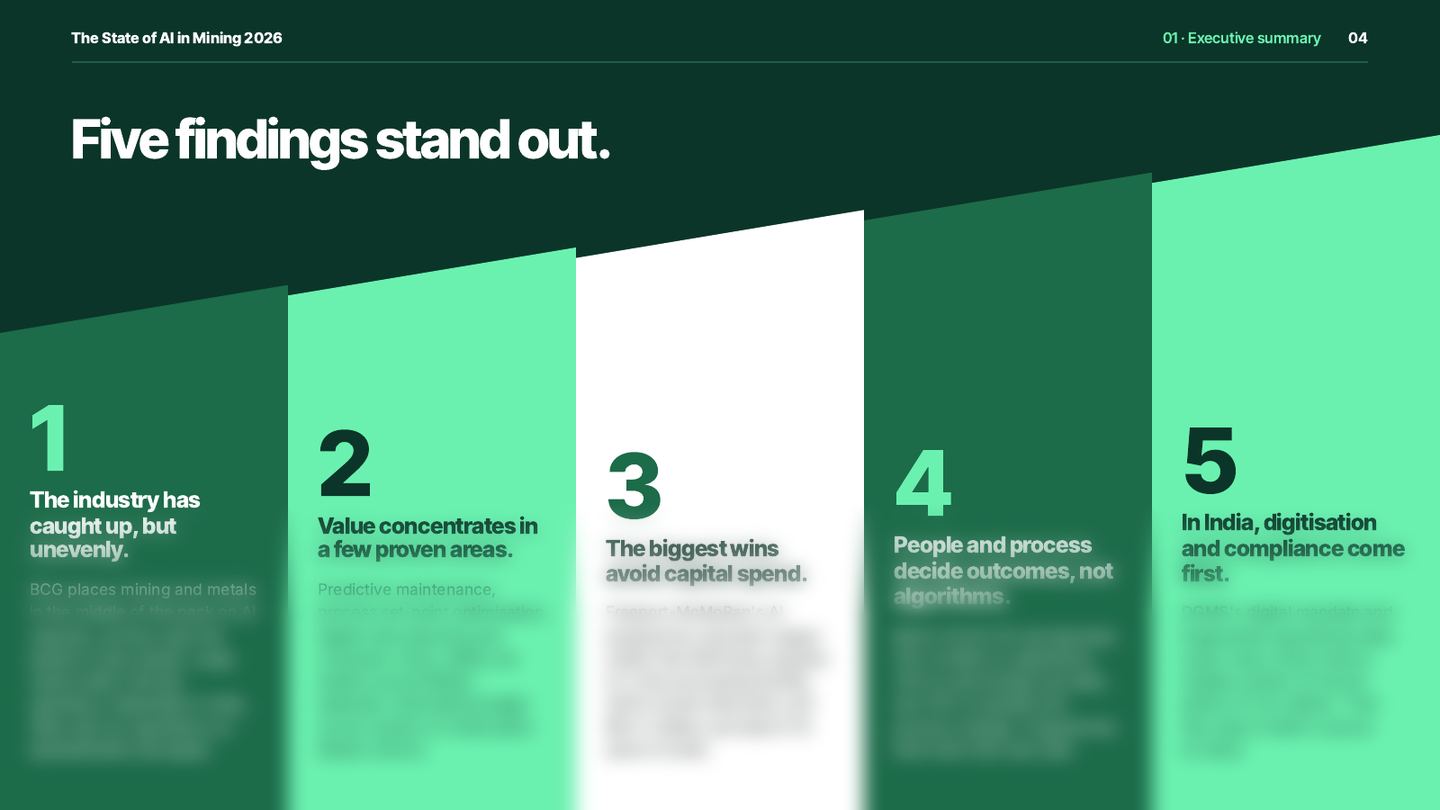
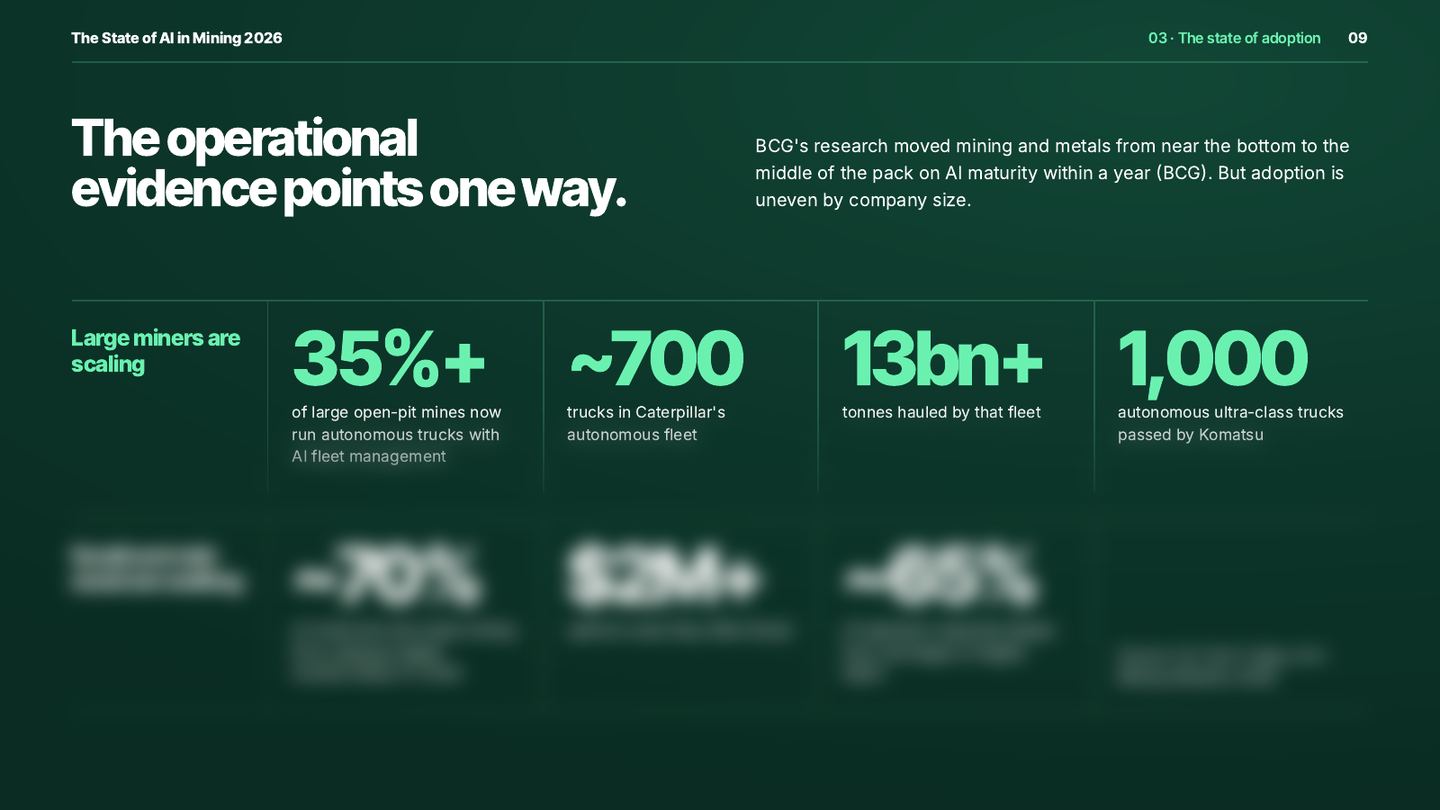
BCG now places mining and metals in the middle of the pack on AI maturity, up from near the bottom a year earlier. Large miners lead. Many mid-tier operators, especially in India, still run on spreadsheets and paper.
Chapter: The state of adoption · page 9Predictive maintenance, process set-point optimisation, digital-twin planning and computer-vision safety pay back reliably. Spreading the budget across dozens of small pilots dilutes the return.
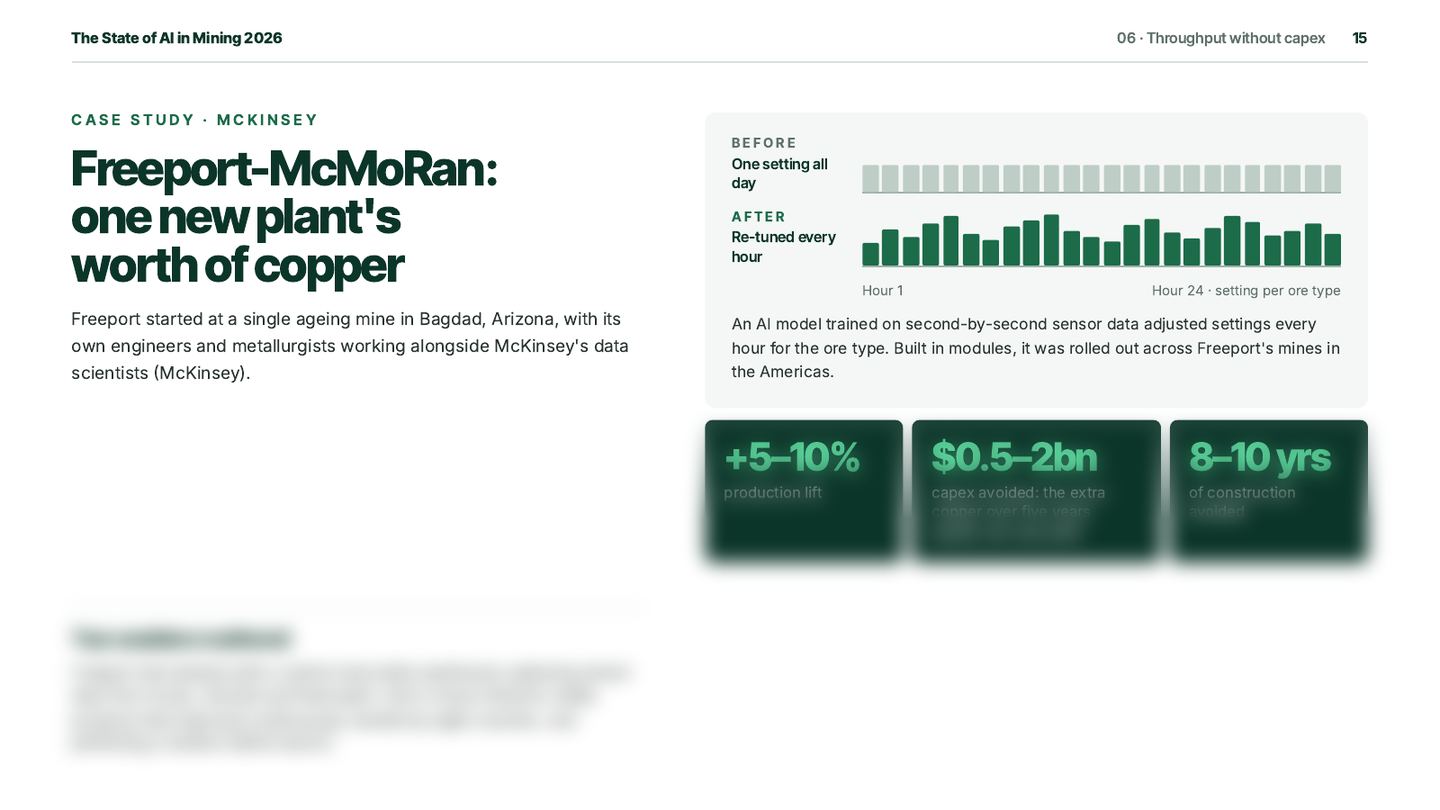
Chapter: Predictive maintenance and reliability · page 12Freeport-McMoRan’s AI programme unlocked copper output that McKinsey equates to a new processing plant. That plant would cost $0.5–2 billion and take 8–10 years to build.
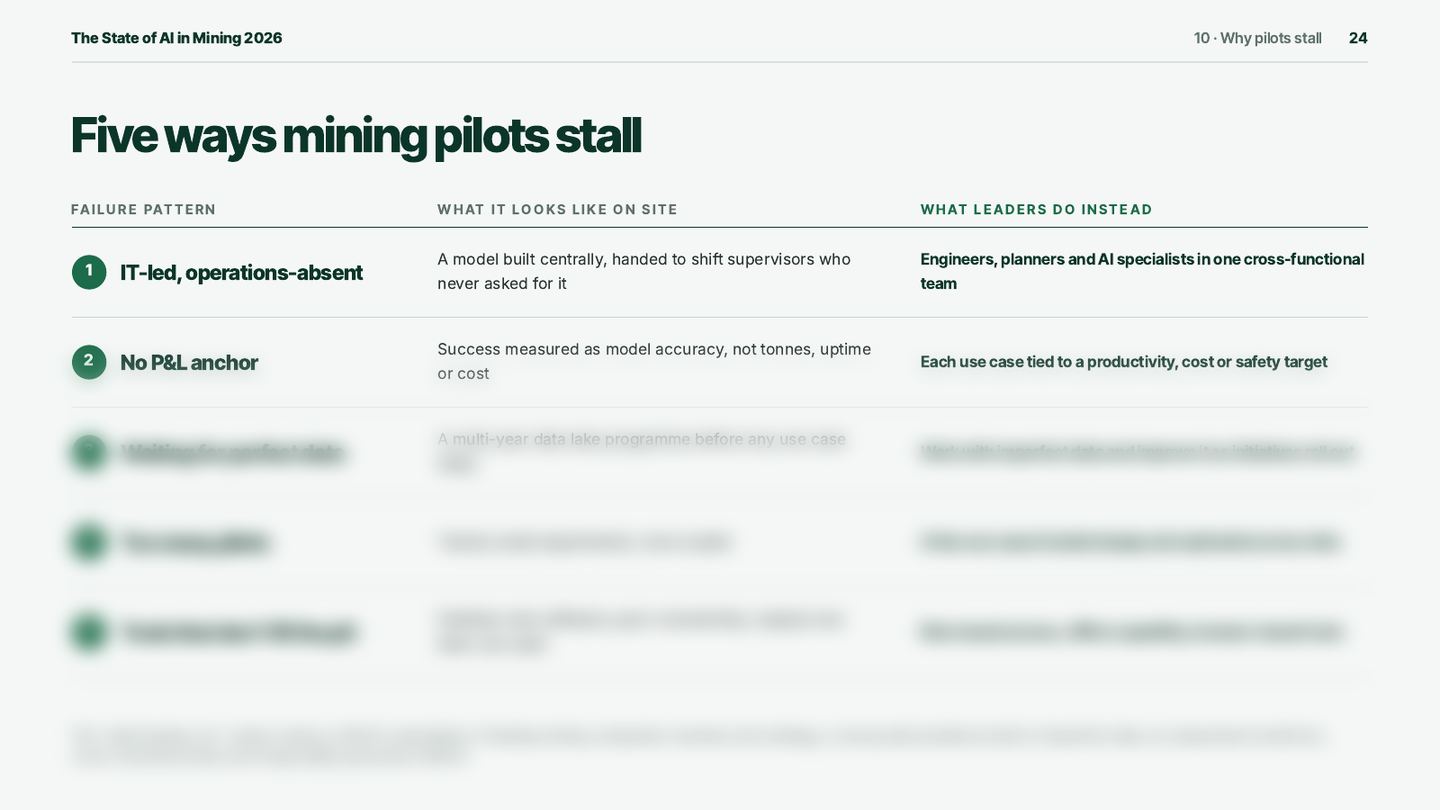
Chapter: Throughput without capex · page 15BCG’s 10-20-70 rule puts 10% of the effort into algorithms, 20% into technology and data, and 70% into people and process change. Programmes that turn this ratio around stall.
Chapter: Why pilots stall · page 24DGMS’s digital mandate and scattered operational data mean many mines need a reliable system of record before AI can deliver. That first step is itself a source of value.
Chapter: The India lens · page 21
 Full page in the report
- Case studiesHow Freeport-McMoRan and BHP Escondida turned AI into output, with the numbers.
- The India lensWhat Coal India, Hindustan Zinc and the DGMS mandate mean for Indian operators.
- The playbookOne use case to signed-off impact in 90 days, and five questions to ask before the next pilot.
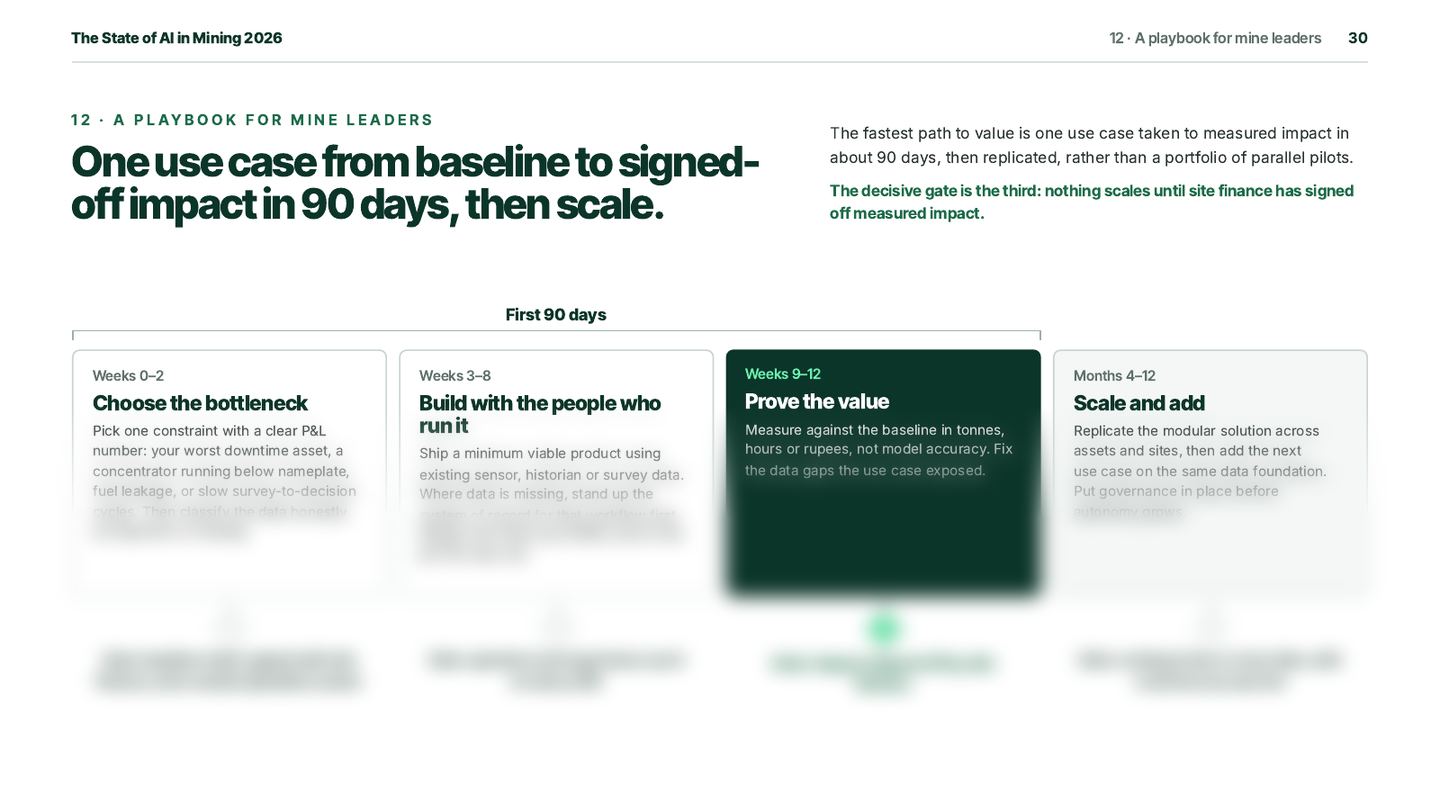
One use case. Signed-off impact in 90 days. Then scale.
The report ends with the plan the leaders follow: pick one bottleneck, build with the crew who run it, and let site finance sign off the result before anything scales.
- Weeks 0–2Choose the bottleneck
- Weeks 3–8Build with the people who run it
- Weeks 9–12Prove the value
- Months 4–12Scale and add
Written for
- COOs, mine heads and site leaders
- Heads of maintenance and reliability
- CIOs, CDOs and digital leads
- Mining contractors and services firms
Get your free copy
The State of AI in Mining 2026 · 33-page PDF


Want to know where AI will pay back on your sites?
Book a 30-minute call with our team. We will look at your biggest bottleneck, whether that is downtime, fuel, survey or compliance, and show you what the first 90 days would look like.
Book a meeting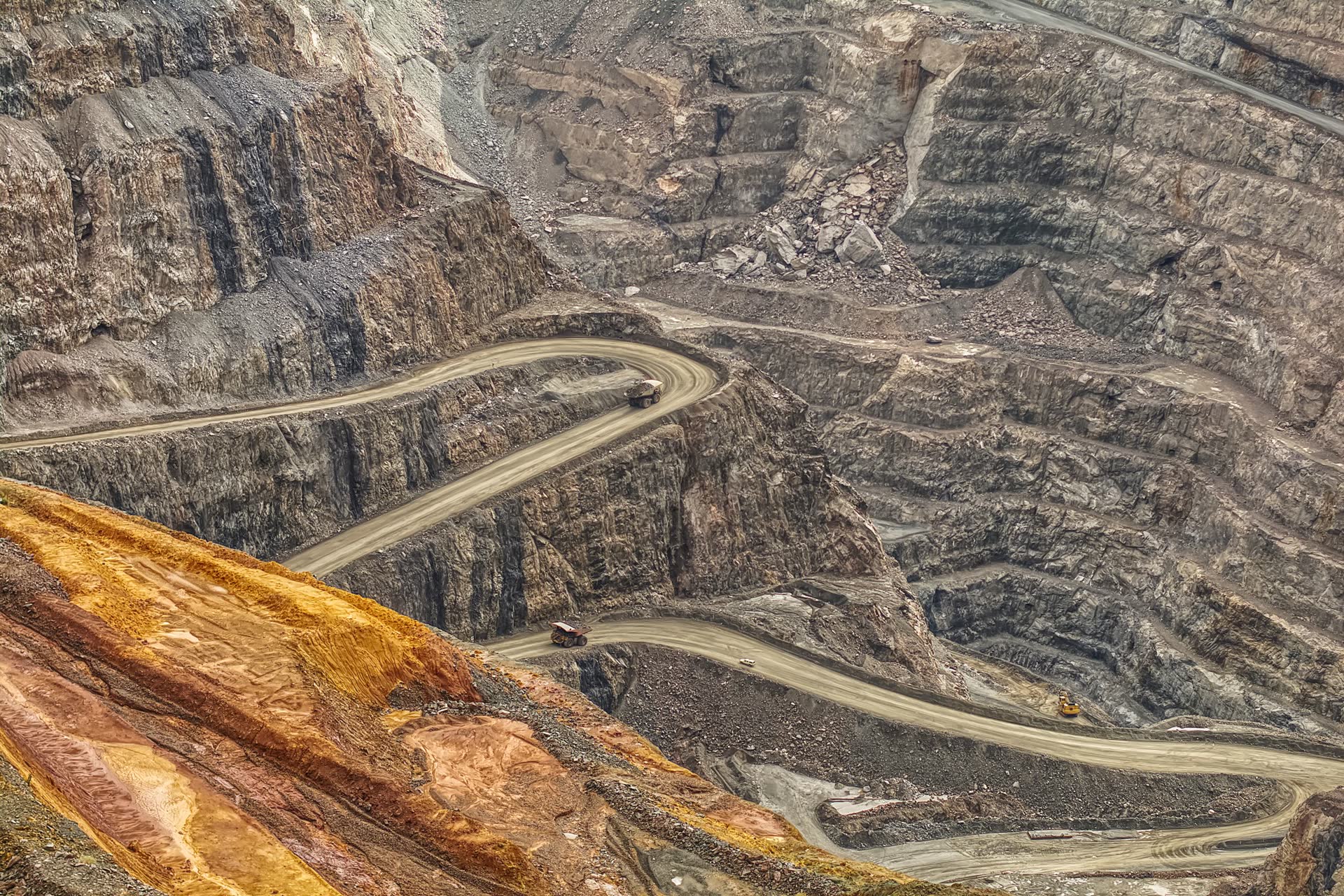 Industries · MiningSee how we build for miningOne operational record for production, fleet, fuel, stores, safety and drone survey. It works alongside SAP and is mapped to DGMS.Explore AI for mining
Questions
About the report
Is The State of AI in Mining 2026 report free?
Yes. It is a free 33-page PDF. Enter your name and work email on this page and the download starts straight away.
How much can AI improve a mine’s performance?
The report finds that proven AI applications lift site throughput by 2–5% and improve margins by 2–4 percentage points. Predictive maintenance has the clearest payback: typically 12–24 months on a $1–5 million site investment.
What does the report cover?
Five findings on AI in mining: how far adoption has come, the few areas where value concentrates, why the biggest wins avoid capital spend, why people and process decide outcomes, and what comes first in India. It includes case studies from Freeport-McMoRan and BHP Escondida, an India chapter on Coal India and the DGMS mandate, and a 90-day playbook for mine leaders.
Why do most AI pilots in mining stall?
Because programmes put the effort in the wrong place. BCG’s 10-20-70 rule gives 10% of the effort to algorithms, 20% to technology and data and 70% to people and process change; programmes that turn that ratio around stall. The report lists the five most common ways mining pilots fail and what leaders do instead.
What is the report based on?
Published research and company disclosures from BCG, McKinsey, Deloitte and BHP, industry market data, and KnackLabs’ own project work with Indian mining operators. No primary survey was run; sources are weighted by how reliable they are.